As the days grow shorter and temperatures drop, winter illnesses become increasingly common. While we often focus on symptoms like fatigue, blocked noses and sore throats, many people overlook the impact these illnesses can have on oral health. From dry mouth to enamel erosion and skipped brushing, colds and flu can make teeth and gums more vulnerable. Being aware of these risks and taking simple precautions can help preserve your smile throughout the season.
How Winter Health Issues Impact the Mouth
When the body is busy fighting infection, everyday dental routines can be disrupted. Dry mouth is one of the most frequent issues, often caused by breathing through a blocked nose. Saliva plays a vital role in neutralising acids, washing away food particles and controlling bacteria. When saliva is reduced, bacteria multiply more easily, which can lead to bad breath, tooth decay, gum irritation and ulcers. Common cold and flu medications, such as antihistamines and decongestants, can further decrease saliva flow, compounding the problem.
Winter illnesses may also increase acidity in the mouth, especially if vomiting or nausea occurs. Acid from the stomach weakens enamel, and brushing too soon afterwards can make damage worse. Even without vomiting, acidic drinks and remedies like fruit teas or honey with lemon can raise acid levels in the mouth, while sweet comfort drinks, such as hot chocolate, provide extra sugar for harmful bacteria. Skipping brushing due to tiredness only increases the risk of plaque buildup.
Cold Medications and Oral Health
Many cold remedies can inadvertently affect your oral health. Decongestants reduce saliva, while syrups and lozenges often contain sugar that clings to teeth. Sugar-free alternatives are available, and rinsing with water after taking medicines can help prevent sugars from lingering and feeding bacteria.
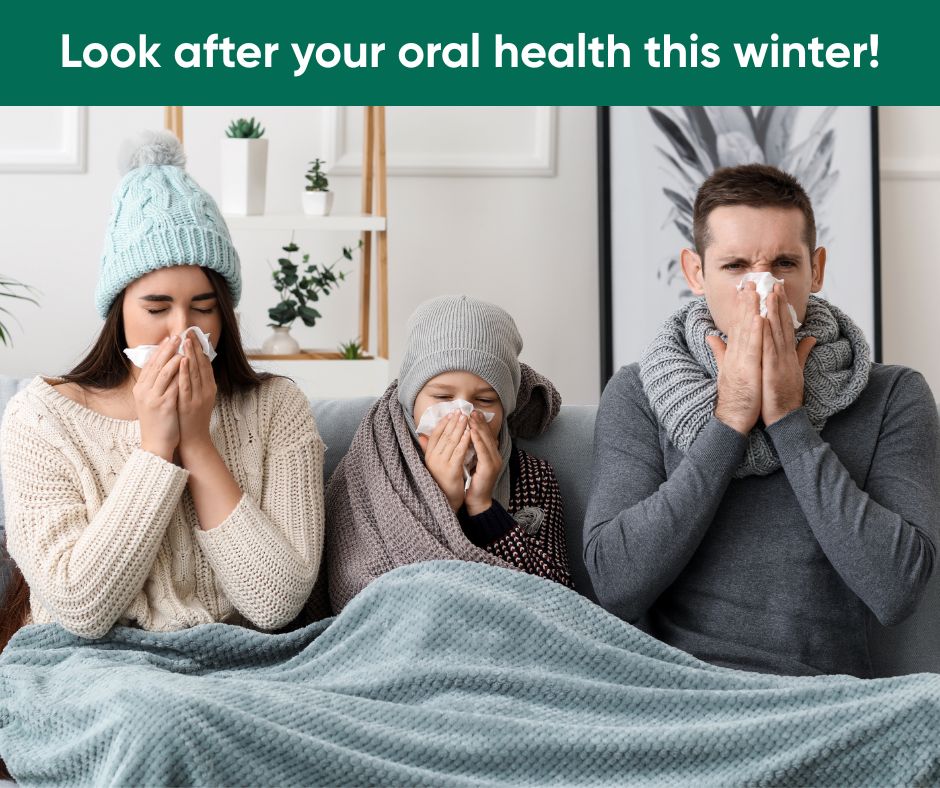
Typical Symptoms Experienced
It’s common to notice temporary oral changes when you’re unwell. Lips may become dry or cracked, particularly if you’re breathing through your mouth. Mouth ulcers can appear when the immune system is low, and while they typically heal on their own, they can be uncomfortable. Plaque buildup from inconsistent brushing can cause bleeding gums, and bad breath is common when mucus from the nose or sinuses drips into the throat. Most of these symptoms resolve once recovery begins, but persistent issues should be checked by a dentist.
Maintaining Oral Health During Illness
Protecting your teeth and gums while you’re sick is possible with a few simple actions. Staying hydrated helps maintain saliva flow, and keeping to a brushing routine prevents plaque accumulation. Additional tips include:
- Drinking plenty of water throughout the day.
- Brushing gently twice a day
- Choosing sugar-free syrups and lozenges
- Rinsing your mouth after vomiting and waiting 30 minutes before brushing
- Using a humidifier to reduce mouth dryness at night.
- Replacing your toothbrush after recovery
These habits reduce the risk of decay, gum inflammation and bad breath while your body focuses on recovery.
When to Seek Expert Advice
Most oral issues caused by colds or flu are temporary, but persistent tooth sensitivity, prolonged bleeding gums, ongoing bad breath, or mouth ulcers lasting over two weeks should prompt a dental visit. Early assessment ensures minor problems don’t worsen.
Final Thoughts on Oral Health in the Winter
Winter is a wonderful time to enjoy festive celebrations, but it’s also a period when extra care is needed to maintain oral health. By following simple hygiene practices and seeking dental advice when necessary, you can protect your teeth and gums while staying well during the season. Planning a pre-Christmas check-up is a simple way to ensure your smile stays healthy and bright through the holidays. Call reception today on 01252 620500 to book your dental check-up, or use our simple online booking system.